Online Course | ⏱️ 80 Minutes
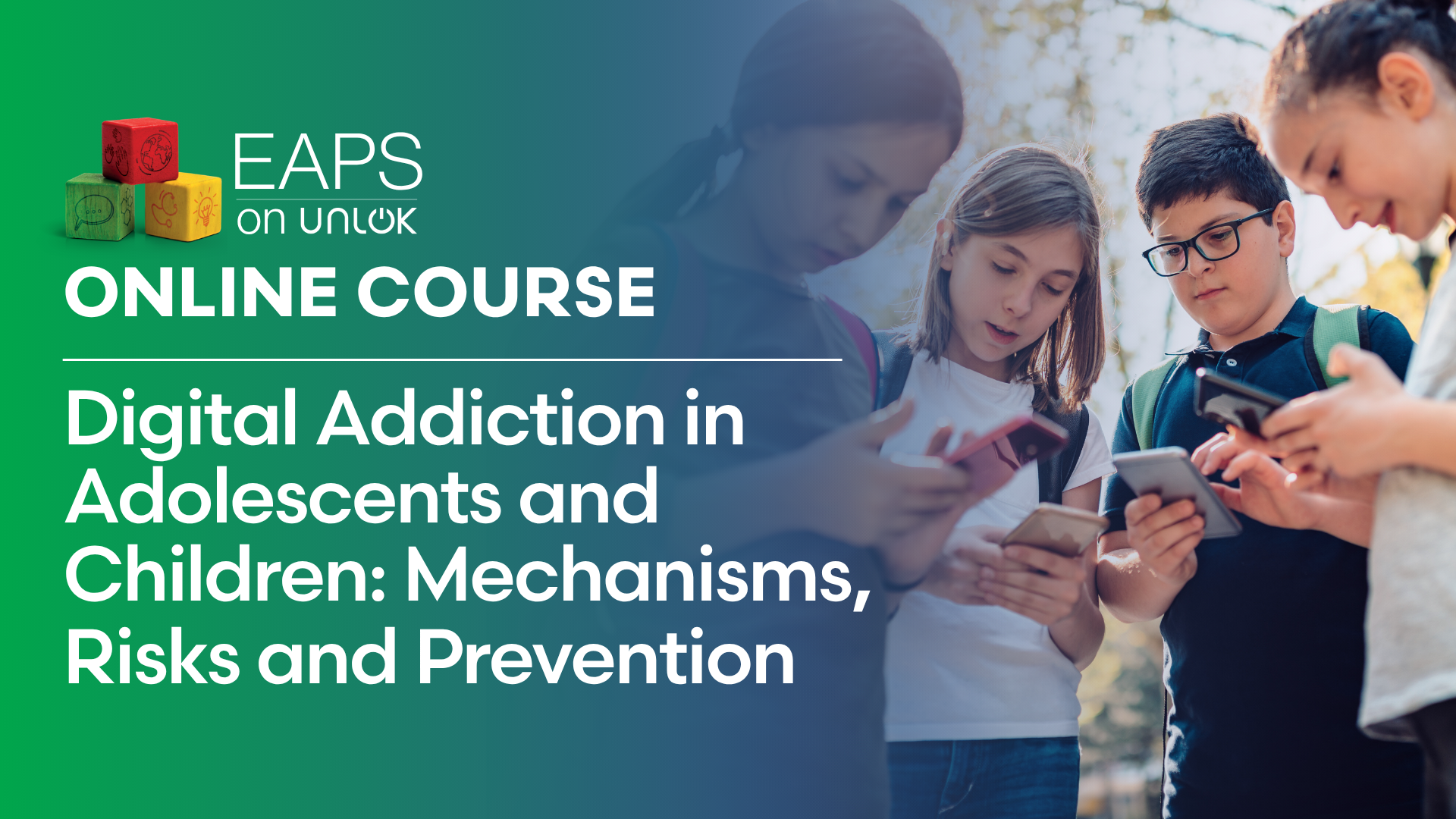
Digital media is an integral part of the lives of children and adolescents, but what makes some forms of media use particularly engaging, or even difficult to control?
Infinite scroll, notifications, variable rewards: digital platforms are engineered to hook the brain’s dopamine pathway. Based on the EAPS plenary lecture by Prof. Dimitri A. Christakis, this interactive online course explores the neurobiological, psychological and behavioural mechanisms underlying digital addiction, examining how habit formation and platform design converge to shape compulsive use.
Through short video segments, reflective activities and knowledge checks, the course examines how digital platform design influences behaviour, reviews evidence linking problematic media use to outcomes such as sleep disturbances and mental health risks, and explores practical strategies for promoting healthy media habits in children and adolescents.
The course concludes with practical recommendations that can be applied in clinical practice and family guidance.
Course Modules
- The Course Expert & Introductory Quiz
- Evolution of Screen Media
- Reward Pathway, Habit Formation & Sleep
- Exposure Outcomes and Screen Time
- Diagnostic Frameworks
- Social Media and Problematic Use
- Behavioural Mechanisms and the Attention Economy
- Taxonomy of Media Use and Exposure Prevalence
- Risks for Infants
- Practical Tips for Practitioners
- Final Assessment & Course Evaluation
Faculty
Speaker
Prof. Dimitri A. Christakis
University of Washington, Seattle Children’s Hospital, US
Learning Outcomes
By completing this course, you will be able to:
- Explain the neurobiological and behavioural mechanisms that contribute to digital addiction.
- Analyse how digital platform design influences engagement and problematic use.
- Identify practical strategies to support healthy media habits.
