Beyond Glucose Control: Towards Freedom in Type 1 Diabetes Care
ATTD Asia 2026 | Expert Interviews
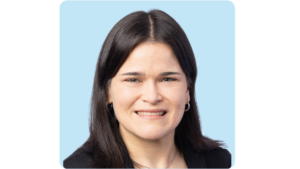
Dr. Brynn Marks
Senior Director of Medical Affairs, Breakthrough T1D
What does the future of type 1 diabetes care look like beyond glucose management? Drawing on her experience as a clinician, researcher and person living with type 1 diabetes, Dr. Marks shares her perspectives on fully closed-loop systems, early detection, disease-modifying therapies and islet cell replacement. She explores how emerging innovations could not only improve clinical outcomes but also transform the everyday experience of living with type 1 diabetes.
What first drew you to diabetes technology and innovation in care, and what has kept you passionate about this field?
I was diagnosed with type 1 diabetes (T1D) at the age of five and honestly can’t remember much of life before T1D.
My mom is a pediatrician, so I had every chance to succeed with T1D management. And I did, until I became a teenager. I spent a few years investing every ounce of brainpower into ignoring T1D and taking just enough insulin to avoid diabetic ketoacidosis (DKA).
Eventually, with support from my endocrinologist, who helped me set small, achievable goals, I became open to using diabetes technologies and adjunctive therapies.
I realized early in my medical training that I wanted to pursue a career in pediatric endocrinology. Over time, I became increasingly involved in the T1D community through volunteer opportunities, diabetes camps and meeting fellow medical professionals who, like me, were living with T1D.
Automated insulin delivery (AID) reached clinics when I was a fellow. I am always the first in line to try a new AID system. I have tried every system available on the U.S. market, and I look forward to learning the ins and outs of each one so I can teach others how to make these technologies work for them.
This inspired me to pursue a master’s degree in health science professions education and focus my clinical research on improving the implementation of diabetes technologies through education for clinicians and parents of children with T1D.
I was fortunate to receive NIH funding, serve as a site principal investigator for pivotal trials and receive investigator-initiated funding to support these goals.
My work created a natural connection to the International Society for Pediatric and Adolescent Diabetes (ISPAD), where I have been fortunate to serve in various capacities, including my current role on the Executive Board as Communications Director.
These connections have helped me build a global network of friends and colleagues committed to the same cause.
In 2025, I had the opportunity to join the Medical Affairs team at Breakthrough T1D. This role allows me to combine my expertise as a person living with T1D, a diabetes technology specialist and a medical educator to bridge the gap between research advances and the clinical implementation of emerging T1D therapies.
Spending my days thinking about how to detect and prevent T1D, while improving the lives of those currently living with the condition, keeps me going!
Diabetes technology is evolving at an extraordinary pace. Which developments do you believe have the greatest potential to make a meaningful difference to people living with diabetes?
Diabetes technology has drastically improved the lives of people living with T1D who are fortunate enough to access these devices.
The number of people achieving glycemic targets intended to reduce the risk of long-term complications has increased significantly, yet the burdens of T1D remain.
AID users still need to count carbohydrates, administer meal boluses, plan for exercise, consider the long duration of action of currently available insulins and navigate the on-body presence of devices and alerts for hypoglycemia and hyperglycemia that are intended to help but can also be intrusive.
The next step for AID is a fully closed-loop system that can eliminate the need for meal boluses and exercise planning, while adapting to emerging therapies, including ultra-rapid insulins, adjunctive therapies, multi-hormonal systems and multi-analyte sensing.
However, there has been no universally agreed definition of this term, and devices in Europe have already received CE marking as “fully closed loop.”
As clinical trials of fully closed-loop systems continue to advance, it has become important to establish consensus on how these emerging systems should be defined.
I had the privilege of leading an international panel of experts in glycemic targets, diabetes technology, person-reported outcomes, artificial intelligence and exercise to develop a manuscript entitled “Roadmap to Fully Closing the Loop to Optimize Health in Type 1 Diabetes,” published in Diabetes Technology & Therapeutics in October 2026.
We proposed a person-centred, outcome-driven definition for fully closed-loop systems that incorporates time-in-tight-range glycemic targets, reduces the burden of self-management and improves the lived experience of people with T1D.
I look forward to seeing how fully closed-loop systems evolve!
Where do you see the biggest gaps between the latest evidence and innovations in diabetes care and what is currently happening in everyday clinical practice?
Diabetes technology has advanced rapidly since the U.S. Food and Drug Administration approved the first hybrid closed-loop system in 2016.
However, progress has been slower in screening for early-stage T1D, disease-modifying therapies and islet cell replacement therapies.
It took approximately seven years to complete enrolment for the TN10 study, which led to the approval of teplizumab for stage 2 T1D in 2022.
More needs to be done to support participation in screening programs that can both prevent DKA and provide people with early-stage T1D opportunities to participate in clinical trials of disease-modifying therapies designed to protect beta cells.
We know that approximately 85-90% of people diagnosed with stage 3 T1D do not have a family history of the condition. We therefore need to move towards population screening to identify more people with early-stage T1D, as proposed in recently published consensus guidance.
We also need to equip clinicians with the right tools to facilitate screening and monitoring and give them the confidence to discuss these opportunities with families.
The ultimate goal is a paradigm shift in which screening for T1D and participation in clinical trials become part of routine T1D care.
We face similar challenges with the clinical implementation of islet cell replacement therapies for people living with stage 4 T1D.
Through the Breakthrough T1D-led Centers of Reference for Islet Cell Therapies program, I have learned that nearly every person with T1D who receives an islet cell transplant, whether through clinical care or a clinical trial, self-refers.
This suggests that clinical teams lack the resources needed to engage in shared decision-making with their patients. As a result, people already living with the burden of T1D must undertake additional research to identify centers offering access to these therapies.
Currently available islet replacement therapies have limited reach, primarily for two reasons: the scarcity of deceased donor cells and the need for immunosuppression.
With scalable manufactured islet cell therapies in late-stage clinical trials and hypoimmune therapies that do not require immunosuppression entering clinical trials, we expect more scalable treatments to become available to the broader T1D community in the future.
Educating interprofessional islet cell therapy teams, supporting access through collaboration with primary care and community endocrinologists, and developing optimal clinical care plans for cell therapy recipients will be essential to the successful implementation of these emerging treatments.
How can education and initiatives such as the ATTD Education Portal and Congress help clinicians translate new evidence and technologies into their day-to-day practice?
The ATTD Congresses offer attendees the opportunity to learn from and interact with leading global experts.
Conversations during question-and-answer sessions, as well as informal discussions in the hallways between sessions, help establish the collaborations needed to advance T1D research and clinical care.
However, through my work with endocrinologists in the U.S. and colleagues around the world, I know that not everyone can attend the conferences where cutting-edge research is presented.
The ATTD Education Portal gives clinicians the opportunity to access educational materials at their convenience, without the costs associated with attending an in-person conference.
My hope is that these educational resources will also help attract more students, early-career clinicians and researchers to the field of T1D.
Looking ahead, what development or change in diabetes care are you most excited about, and why?
I look forward to the day when all people with T1D can access emerging therapies, including disease-modifying therapies and islet cell replacement.
In my more than 35 years of living with T1D, I have learned that I can do anything I put my mind to, whether that’s completing 30-hour calls during my pediatric residency, hiking off the grid in rural Mexico, travelling to small towns in Egypt to inspire children with T1D or working with international experts to improve T1D care.
The catch is that I am constantly planning.
How many sets of diabetes supplies should I bring? How will I navigate airport security when I don’t speak the language? What if I experience hypoglycemia on stage? How many carbohydrates are in that plate of food I’ve never seen before? How long will I hike, and how difficult will it be? Did I bring enough hypoglycemia treatments? What if my sensor fails or I shatter my pump screen?
Disease-modifying therapies and islet cell replacement therapies have the potential to offer people living with T1D the chance to experience something we don’t often get to enjoy: the freedom to be spontaneous.
Continue Learning with the Expert
COMING SOON | NEW ONLINE COURSE SERIES
Interventional Diabetology for T1D
Explore emerging approaches to type 1 diabetes care in this upcoming six-session educational series featuring Dr. Brynn Marks and other experts.
Designed for healthcare professionals, the series will build foundational knowledge in interventional diabetology for children, adolescents and adults living with T1D.
6 Online Sessions | 1 Hour Each
Coming Soon to the ATTD Education Portal
Explore the ATTD Education Portal
Continue Exploring Diabetes Education
Discover more expert perspectives, conference highlights, CME-accredited learning activities, podcasts and webinars on the ATTD Education Portal.