Beyond the Data: How AI and CGM Could Transform Diabetes Care
ATTD Asia 2026 | Expert Interviews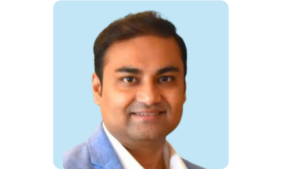
Dr. Amit Kumar Dey
Consultant, Diabetes, Obesity & Metabolic Disorders
Chair, International Diabetes Federation (IDF) AI Technology Committee
Kolkata, India
How can continuous glucose monitoring and artificial intelligence transform diabetes care while ensuring that innovation reaches those who need it most? In this ATTD Asia expert interview, Dr. Amit Kumar Dey explores the transition towards predictive, personalized diabetes management, the challenges of implementing new technologies in clinical practice and the importance of responsible AI.
What first drew you to diabetes technology and innovation in care, and what has kept you passionate about this field?
As a diabetologist in India, I see every day how far apart two things can be: what diabetes technology makes possible and what most of my patients actually receive.
Continuous glucose monitoring (CGM) first showed me this. Seeing a patient’s glucose as a continuous story, rather than a few snapshots, changed how I understood the disease and how my patients understood themselves.
That led me to study CGM in our own population and later to artificial intelligence (AI). AI is the next layer that can turn this flood of data into decisions.
What keeps me passionate is the people, more than the technology. A well-used tool can give someone confidence and control over a condition that otherwise dominates their life.
Today, much of my work focuses on two things: ensuring clinicians are equipped to use these tools effectively and ensuring the tools are developed responsibly enough to deserve their trust.
Diabetes technology is evolving at an extraordinary pace. Which developments do you believe have the greatest potential to make a meaningful difference to people living with diabetes?
The first is CGM itself, particularly its expansion beyond insulin-treated type 1 diabetes. The real public health impact will come from bringing CGM to the much larger population with type 2 diabetes, including in low- and middle-income countries.
The second is automated insulin delivery (AID). These systems have already demonstrated that much of the daily burden of glucose management can be safely managed by an algorithm.
The third is AI layered on top of these data streams. Examples include decision-support tools that help busy clinicians interpret glucose profiles in seconds, risk prediction systems that identify who needs attention first and, looking further ahead, “digital twin” models that simulate how an individual might respond to a change in therapy.
The common thread is a shift in how care works: from reacting to occasional measurements towards continuous, personalized and anticipatory care.
Where do you see the biggest gaps between the latest evidence and innovations in diabetes care and what is currently happening in everyday clinical practice?
The gap is less about evidence and more about implementation.
Access is uneven. The evidence for CGM is strong, yet in much of the world, it remains limited to a small, well-resourced minority. People with type 2 diabetes who could benefit are often left out.
Interpretation lags behind technology. Many clinicians have access to ambulatory glucose profiles but have never been trained to interpret them efficiently, so valuable data goes unused.
Therapeutic inertia persists. Even when the data clearly show a need to change treatment, that change is often delayed.
AI is moving faster than the frameworks around it. Hundreds of AI tools now exist, but few have been validated in diverse populations or come with clear standards for safety, fairness and accountability.
Through the IDF Technology & AI Working Group, we are working to address this last gap.
How can education and initiatives such as the ATTD Education Portal and Congress help clinicians translate new evidence and technologies into their day-to-day practice?
Technology only works if people know how to use it well.
In our multicenter Indian CGM study involving more than 550 people, how often patients actually used the sensor was a key driver of their HbA1c improvement. Skill and engagement matter as much as the device.
Education is what turns a promising trial result into a routine clinical habit.
Platforms like the ATTD Education Portal help in three ways:
- They make expert knowledge accessible far beyond those who can attend a congress in person.
- They focus on practical skills, such as interpreting a CGM report or setting up an automated insulin delivery system.
- They help clinicians critically appraise new tools rather than simply adopt them.
This last point matters more than ever with AI. Clinicians need sufficient AI literacy to ask the right questions: Is a tool useful, valid, safe, fair and accountable?
The ATTD Congress also builds a community, and that community is how good practice spreads from center to center.
Looking ahead, what development or change in diabetes care are you most excited about, and why?
I am most excited about the convergence of continuous data and intelligent systems. Sensors, insulin delivery and AI could combine to create care that supports both patients and clinicians between visits, not only during them.
Imagine a system that notices a worrying pattern early, suggests a sensible adjustment, explains its reasoning and leaves the final decision with a human. That could transform diabetes care in places with very few specialists.
What excites me equally is that the conversation is maturing.
Ten years ago, we asked whether these tools work. Today, we are also asking whether they work for everyone, whether they are transparent and who is accountable when they don’t.
If we get that right, technology can narrow the gaps in diabetes care rather than widen them, and that is a future worth working towards.
Continue Learning with Dr. Amit Dey
AI in Diabetic Retinopathy Screening: Transforming Accessibility and Precision
Explore how artificial intelligence is transforming diabetic retinopathy screening, from improving early detection and diagnostic accuracy to expanding access to care. Featuring Dr. Amit Kumar Dey, this expert-led course examines the clinical applications, benefits and limitations of AI-driven screening, with practical perspectives from ophthalmology and diabetology.
1 CME/CPD Credit | Free Online Course
Continue Exploring Diabetes Education
Discover more expert perspectives, conference highlights, CME-accredited learning activities, podcasts and webinars on the ATTD Education Portal.