
One patient, four experts, and a case-based debate on treating diabetes, kidney disease and cardiometabolic risk as a single problem.
A man in his mid-fifties with long-standing type 2 diabetes, obesity, hypertension, early kidney damage and a thickened heart muscle. Dr. Banshi Saboo, Secretary of Diabetes India, described him as exactly the kind of patient clinicians see every week. Yet managing diabetes and CKD (chronic kidney disease) together, alongside cardiovascular and weight-related risk, still leaves hard questions: what to change first, how far to push, and how much one patient can take on at once.
In a joint UNLOKall webinar from CaReMeLO (Cardio-Renal-Metabolic-Liver-Obesity) and Diabetes India, an international panel worked through a real case from Dr. Baruch Itzhak's clinic, one live poll at a time. On one point, every expert agreed: leaving this patient's treatment unchanged is not an option.
The case
One patient, four organ systems under strain
Male, 55 · type 2 diabetes for 12 years
Metabolic
Kidney
Heart and blood pressure
Lipids
Case presented by Dr. Baruch Itzhak. Status labels reflect the panel's own assessments during the CaReMeLO and Diabetes India joint webinar.
Glycaemic Control: Why GLP-1 Receptor Agonists Led the Vote
The first poll asked participants what they would do next about this patient's glucose control. The answer was decisive.
Live audience poll
HbA1c is 7.8% on metformin and an SGLT2 inhibitor. What comes next?
- Add a GLP-1 receptor agonist69%
- Add or intensify insulin19%
- Continue the current regimen13%
Webinar participants' responses, as reported during the session.
Dr. Anoop Misra, President of the Diabetes Foundation (India), agreed with the majority. With a high HbA1c, a high BMI and heavy albuminuria placing the patient in CKD stage 3a, he said, standing still was not defensible. He no longer favours insulin in this setting: it lowers glucose but adds weight and does little for the kidney, the heart or lipids.
A glucagon-like peptide-1 receptor agonist (GLP-1 RA), in Dr. Misra's view, works in synergy with the patient's metformin and sodium-glucose cotransporter 2 (SGLT2) inhibitor, lowers glucose without substantially raising hypoglycaemia risk, and addresses kidney, heart and weight at the same time.
Dr. Stefano Del Prato, who contributed to the latest ADA/EASD consensus on hyperglycaemia, added that the consensus prefers a GLP-1 RA over basal insulin when an injectable is needed, and puts far more weight on body weight itself. For a relatively young patient who already shows kidney damage, he argued, it was time to stop procrastinating and aim for an HbA1c of 7%, or even 6.5%, to limit further microvascular damage. The panel went on to debate which agent to choose, the role of oral formulations and what to do with full-dose metformin at this level of kidney function.
Beyond LDL: Reading the Whole Lipid Profile
With LDL cholesterol already at goal on a statin plus ezetimibe, the lipid question looked settled. Dr. Avraham Karasik, Professor at Reichman University, saw a different problem: an atherogenic pattern of low HDL and raised triglycerides. He noted a triglyceride-to-HDL ratio of 3.9, against an optimum below 2, which he linked to small, dense LDL particles and higher cardiovascular risk.
Even so, Dr. Karasik chose not to intensify LDL-lowering therapy. The patient was already at goal under ADA criteria, and going further would mean expensive PCSK9 therapy with what he called diminishing added value in primary prevention. He expected the GLP-1 RA to do the heavy lifting on triglycerides and HDL instead.
Dr. Del Prato noted that the "right" LDL target depends on which guideline you follow and how you calculate this patient's cardiovascular risk. He also offered a pragmatic reminder: lifestyle change remains the foundation, but it will not move LDL cholesterol very much, even if it can help with triglycerides.
Diabetes and CKD: Albuminuria Is the Real Target
Blood pressure sat right on the threshold, as the case map shows, and the poll on hypertension split participants in several directions. Dr. Del Prato argued that the number mattered less than the context: established left ventricular hypertrophy and heavy albuminuria make pressure control critical for slowing CKD progression and reducing independent cardiovascular risk.
Dr. Karasik put it more bluntly: for this patient, blood pressure is not the point, albuminuria is. Enalapril at 10 mg still has plenty of room to go, and because the newer kidney-protective agents were tested on top of renin-angiotensin system (RAS) inhibition, he argued that RAS blockade should be exhausted first. Taken together, the panel described kidney protection resting on up to four pillars, built one at a time.
SGLT2 inhibitor
Already in place
GLP-1 RA
Start now
RAS inhibition
Titrate stepwise, checking eGFR, albuminuria and potassium
Finerenone
Add if albuminuria has not fallen enough
Sequence as discussed by Dr. Avraham Karasik, Dr. Anoop Misra and Dr. Stefano Del Prato. Pillars are added one at a time, not all at one visit.
Dr. Misra said he would hold finerenone for around two months after starting the GLP-1 RA and intensifying RAS blockade, then decide based on the change in albuminuria and the patient's potassium. Dr. Karasik stressed that pacing is not the same as caution: without aggressive treatment, he warned, this patient could need dialysis before reaching 65.
Weight, Adherence and the Patient in the Room
On weight management, almost every participant chose a structured programme, pharmacotherapy or both. Dr. Itzhak, a family physician and diabetologist, favoured combining them, with a GLP-1 RA started low and titrated slowly. Dr. Del Prato recalled that the ADA/EASD consensus recommends a weight reduction of at least 15% for patients like this one.
Dr. Misra framed the goal as fat loss rather than simply weight loss: preserving muscle and reducing abdominal fat, which he highlighted as particularly relevant in Indian populations, with potential benefits for liver fat too.
Dr. Del Prato closed with a warning about adherence. Adding every recommended drug in one visit could send the patient home overwhelmed, so he advised introducing changes step by step and explaining the plan, including what happens if targets are missed. Dr. Itzhak, speaking as a primary care physician, added that diet deserves the same attention as prescriptions.
Key Takeaways
-
Don't wait.
Leaving treatment unchanged was the one option every panellist rejected for this patient. Dr. Stefano Del Prato and Dr. Anoop Misra
-
Choose therapies that work across organs.
A GLP-1 RA was preferred over insulin because it can address glucose, weight, kidney and heart together. Dr. Anoop Misra and Dr. Stefano Del Prato
-
Look past LDL alone.
A normal-looking LDL can hide an atherogenic profile; the triglyceride-to-HDL ratio tells more of the story. Dr. Avraham Karasik
-
Treat the albuminuria, not just the blood pressure.
Exhaust RAS inhibition before adding finerenone, monitoring potassium and kidney function at each step. Dr. Avraham Karasik and Dr. Anoop Misra
-
Pace the plan for adherence.
Introduce changes step by step, explain why, and keep diet and lifestyle in the conversation. Dr. Stefano Del Prato and Dr. Baruch Itzhak
What made this case compelling was not a single new drug but the way the pieces fit together: glucose, lipids, blood pressure, kidney and weight treated as one connected problem. As Dr. Del Prato observed, this patient has not yet had a cardiovascular event, which means there is still time to change his trajectory.
Watch the Full Session and Earn 1.5 CME Credits
This blog only covers the headline decisions. The full recording includes the complete guideline debate on LDL targets and cardiovascular risk scoring, the panel's view on metformin dosing at reduced eGFR, oral versus injectable GLP-1 RAs, how the plan changes for a smoker with a strong family history of heart disease, potassium management when combining kidney-protective drugs, and the results of all five live polls. Register free on UNLOKall to watch the full webinar and claim 1.5 CME credits.

The CaReMeLO Patient: Is a Holistic Approach Better Than an Individual Disease Approach?
Watch the SessionMeet the Experts

Dr. Avraham Karasik
Professor at Reichman University and former Director of the Institute of Endocrinology at Sheba Medical Center, with extensive research in diabetes and metabolic disorders.
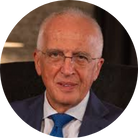
Dr. Stefano Del Prato
Endocrinologist, retired Professor at the University of Pisa, affiliate Professor at the Sant'Anna School of Advanced Studies and President of the European Diabetes Forum.

Dr. Baruch Itzhak
Family medicine specialist and diabetologist at Clalit Health Services and the Technion Faculty of Medicine, known for his work in diabetes prevention, education and integrated primary care.

Dr. Anoop Misra
Diabetologist and endocrinologist, Executive Chairman at Fortis C-DOC, President of the Diabetes Foundation (India) and Editor-in-Chief of Diabetes & Metabolic Syndrome.

Dr. Banshi Saboo
Chairman of Diacare Diabetes Care and Hormone Clinic, Ahmedabad, Chair of IDF South-East Asia, Secretary of Diabetes India and AACE Global Clinician of the Year 2024.
Note: This post was generated by AI based on our The CaReMeLO Patient: Is a Holistic Approach Better Than an Individual Disease Approach? webinar transcript and reviewed by our editorial team. Access the full recording here.